How to Keep an Indoor Cat Mentally Stimulated
Practical ways to support an indoor cat’s natural behaviours with play, climbing, scratching, hiding, puzzle feeding and choice.
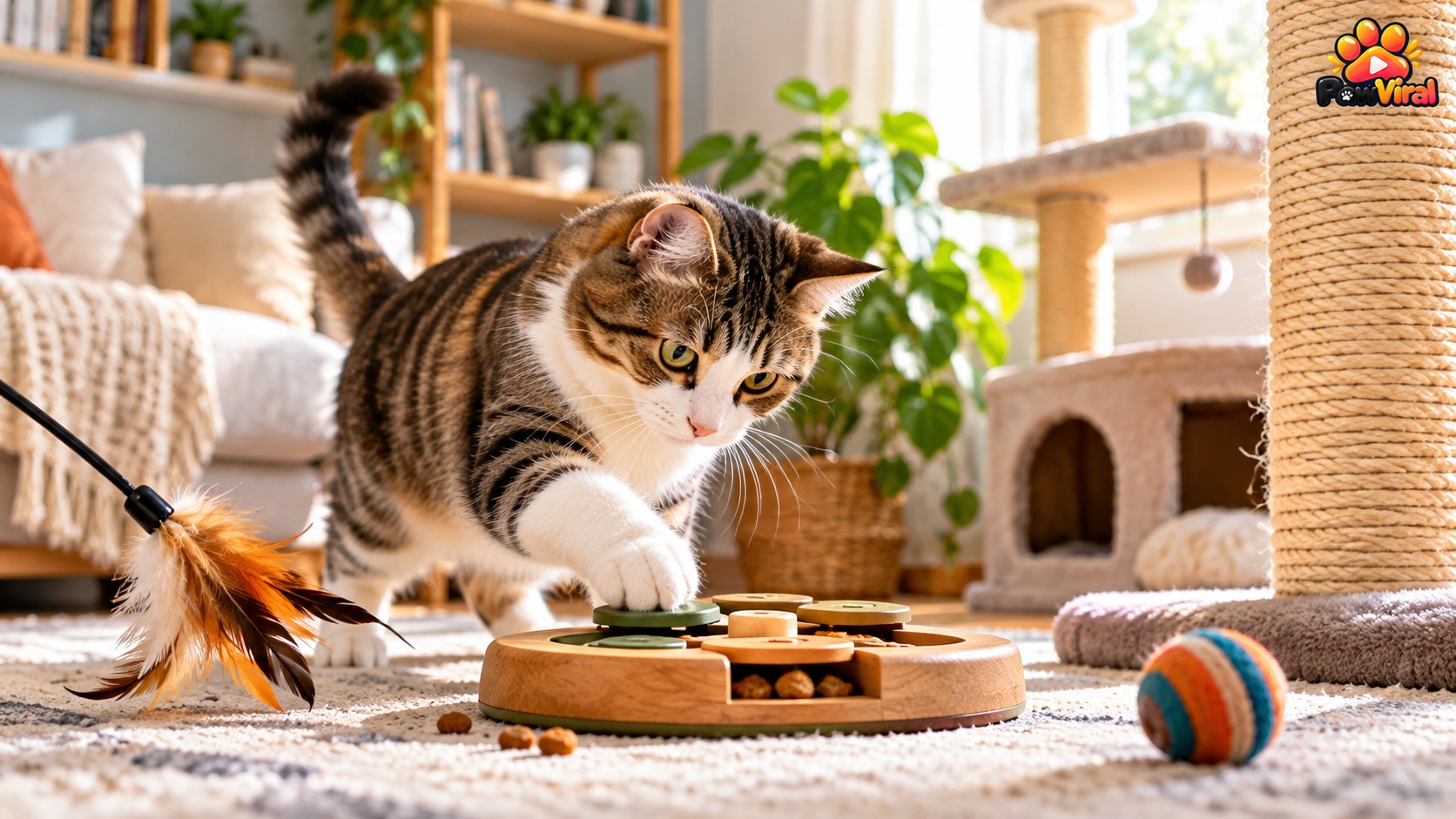
Indoor life needs more than food and a sofa
Cats Protection notes that indoor cats need opportunities to express natural cat behaviours. Without enough stimulation, some cats can become bored or stressed. Enrichment is not about keeping a cat busy every second; it is about giving them safe options to hunt, climb, hide, scratch, explore and rest.
1. Use short, regular play sessions
Interactive play can mimic parts of the hunting sequence. Wand-style toys can encourage stalking, chasing and pouncing while keeping hands at a safe distance. Cats Protection recommends regular play, and very short sessions can still be useful. Let your cat catch the toy periodically so the game has a satisfying end.
2. Rotate toys instead of leaving everything out
A small rotation can make familiar toys feel more interesting. Check toys for damage and remove strings or pieces that could be swallowed. Some toys should only be used under supervision.
3. Add vertical space
Shelves, sturdy cat trees and safe perches let cats climb and survey their surroundings. Vertical territory can be especially valuable in multi-cat homes because it gives cats more ways to avoid each other and choose where to rest.
4. Provide places to hide
Cardboard boxes, covered beds and quiet hideaways can help cats feel secure. Hiding is a normal behaviour. If a cat suddenly hides much more than usual, however, stress or illness may be involved and veterinary advice can be appropriate.
5. Make scratching easy to do in the right place
Scratching is a normal behaviour used for claw maintenance, stretching and communication. Offer stable posts or pads in locations your cat actually uses. Different cats prefer different materials and orientations.
6. Turn some meals into a puzzle
Puzzle feeders can add mental challenge to feeding. Introduce them at an easy level and make sure your cat can still access enough food. A puzzle should not become a source of frustration.
7. Offer safe sensory variety
A secure window perch, new cardboard box, paper bag with handles removed, or supervised cat-safe scent item can add novelty. Avoid toxic plants, essential oils and small objects that could be swallowed.
8. Protect quiet time
Enrichment includes choice and rest. Cats need undisturbed places to sleep and retreat. More stimulation is not always better; watch your cat’s preferences and allow them to walk away.
Frequently asked questions
How often should I play with my cat?
Cats Protection suggests several short play sessions can work well, with younger cats often wanting more frequent play than older cats. Let the individual cat set the pace.
Is a catio useful?
A secure catio can give some indoor cats controlled access to outdoor sights, smells and fresh air, provided it is safely constructed and suits the cat.
Further reading and fact-checking sources
This PawViral article is an original editorial summary informed by the following sources. Use the primary sources for fuller context.
- Cats Protection — guide to indoor cats
- Cats Protection — cats and play
- Cats Protection — enrichment and happy homes
Editorial note: AI-assisted article, reviewed against the linked sources, but not independently reviewed by a veterinarian.