Why Cats Scratch Furniture—and What to Offer Instead
Learn why cats scratch and how to provide suitable posts and surfaces without punishing normal behaviour.
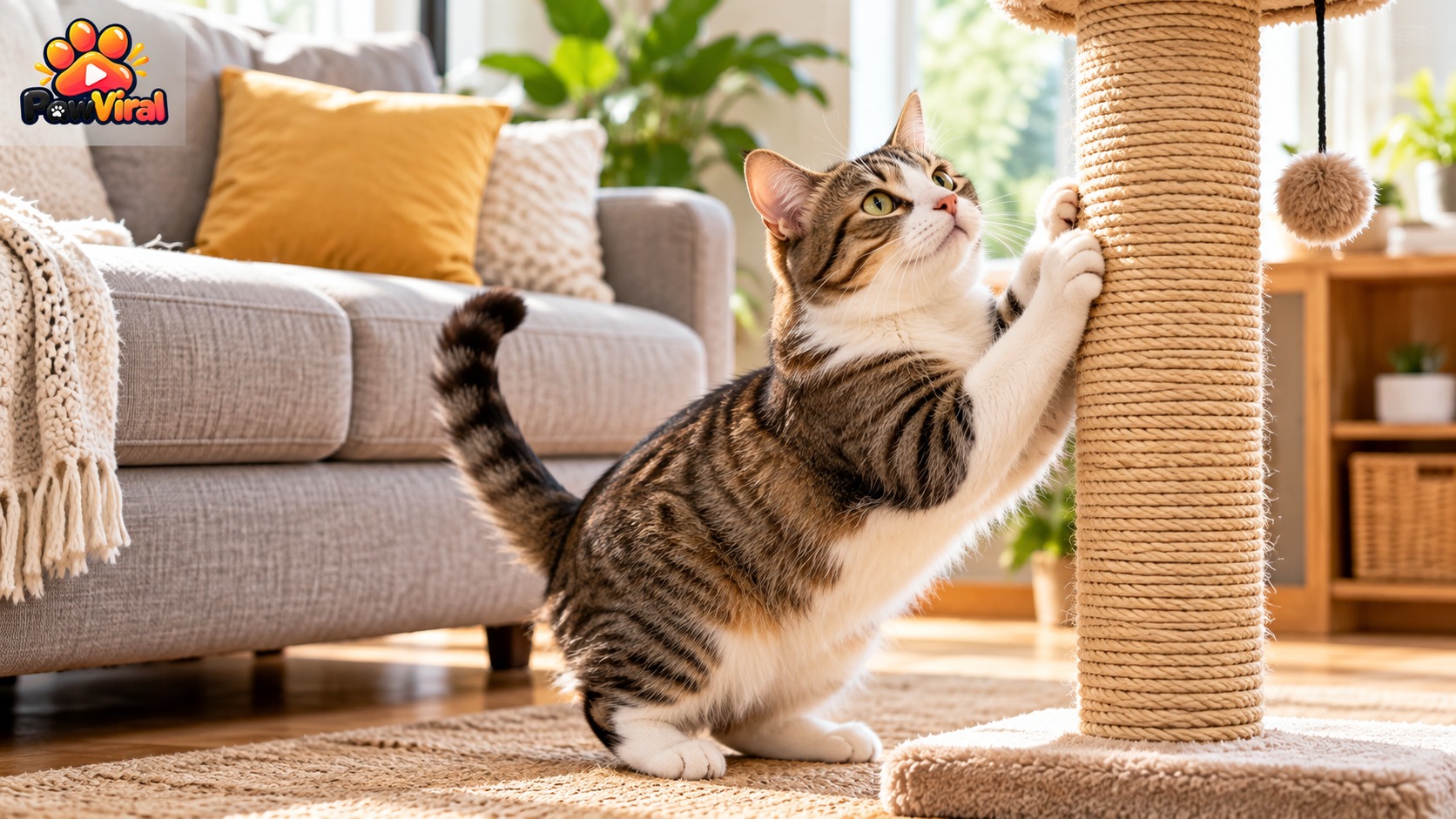
Scratching is normal cat behaviour
Cats scratch to maintain their claws, stretch their bodies and leave scent and visual marks. That means the solution is usually to provide satisfying places to scratch, not to expect your cat to stop scratching altogether.
Look at the surfaces your cat chooses
If your cat targets the side of the sofa, consider a tall, stable post nearby. If they prefer carpets, offer a sturdy horizontal scratcher. Texture and location can matter just as much as the object itself.
Put scratchers where they will be used
A beautiful post hidden in an unused corner might be ignored. Place a stable scratcher next to a frequently targeted piece of furniture or near a favourite resting spot. Make sure tall posts allow a comfortable full-body stretch.
Offer more than one option
Try a combination of cardboard, sisal or other cat-safe surfaces, and replace scratchers once they are unstable or excessively worn. Multi-cat households may benefit from multiple well-spaced options.
Encourage rather than punish
Reward your cat when it chooses an appropriate scratcher. Do not shout or punish scratching: fear can worsen the underlying problem. Temporarily protecting vulnerable furniture can help while your cat learns where else to scratch.
Consider stress and household changes
Sudden increases in scratching can sometimes occur alongside stress. Check whether your cat has safe retreat spaces and enough separate resources. If behaviour changes suddenly or your cat seems unwell, speak to your vet.
Keep play and rest balanced
Daily play and access to climbing, hiding and resting areas can help create a more interesting environment. Let your cat set the pace instead of overwhelming it with unfamiliar objects.
Frequently asked questions
Should I stop my cat scratching completely?
No. Scratching is normal. Offer attractive, safe alternatives in the places your cat actually likes to scratch.
What if new scratching behaviour appears suddenly?
Consider recent changes in the home and discuss persistent or concerning behaviour changes with your vet.
Further reading and fact-checking sources
These original summaries are informed by established animal-welfare guidance. Visit the primary sources for fuller context.
Editorial note: AI-assisted article, fact-checked against the linked sources, but not independently reviewed by a veterinarian.