Niko’s ‘One More Minute’ Park Protest
The walk was over. Niko strongly disagreed.
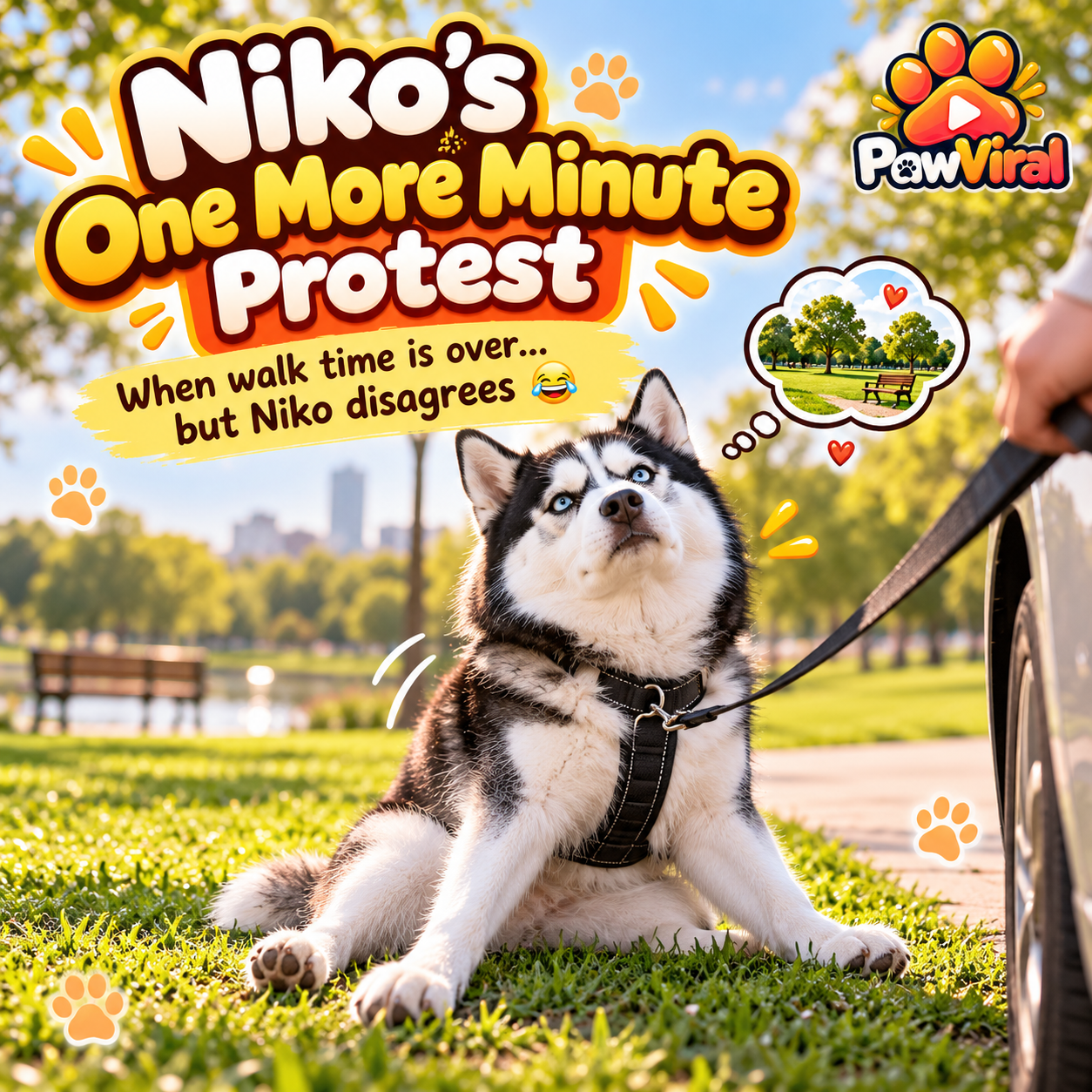
Niko had been having the perfect afternoon. There were trees to sniff, squirrels to monitor and an entire park full of important husky business.
After nearly an hour, his owner finally clipped on the lead and said the words Niko never wanted to hear: “Okay, Niko. Time to go home.”
The protest begins
The effect was immediate.
Niko stopped walking. Then he sat down. Not a casual sit — a full, determined, “I live here now” sit.
His owner took two steps toward the car. Niko remained exactly where he was, staring back at the park as though he had just been separated from his greatest love.
“Come on, Niko.”
Niko answered with one long, dramatic howl.
One more minute?
A couple walking nearby turned around. Niko looked pleased that the public was finally paying attention to the injustice.
His owner tried encouragement. Then treats. Then the cheerful promise of another walk tomorrow.
Niko stood up for approximately three seconds, took one hopeful step back toward the grass, and sat down again.
Eventually, the promise of a snack at home was enough to restart negotiations. Niko slowly followed his owner toward the car, looking over his shoulder at the park every few steps.
The walk was officially over. Niko’s complaint, however, had been formally registered.
Why this story feels familiar
Dogs can become highly predictable around favourite routines, and the end of a walk is an easy setup for comedy. Niko’s dramatic “one more minute” protest is fictional, but it works because many owners recognise the moment when a dog seems reluctant for a fun activity to end.
A real-world safety note
For real dogs, a consistent end-of-walk routine can help. Calling the dog, rewarding cooperation and occasionally doing something pleasant after returning home can make “home time” feel less like the sudden end of all fun.