Why Do Cats Knead Blankets? The Science and Theories
Why cats make biscuits, what starts in kittenhood and why adult cats may still do it.
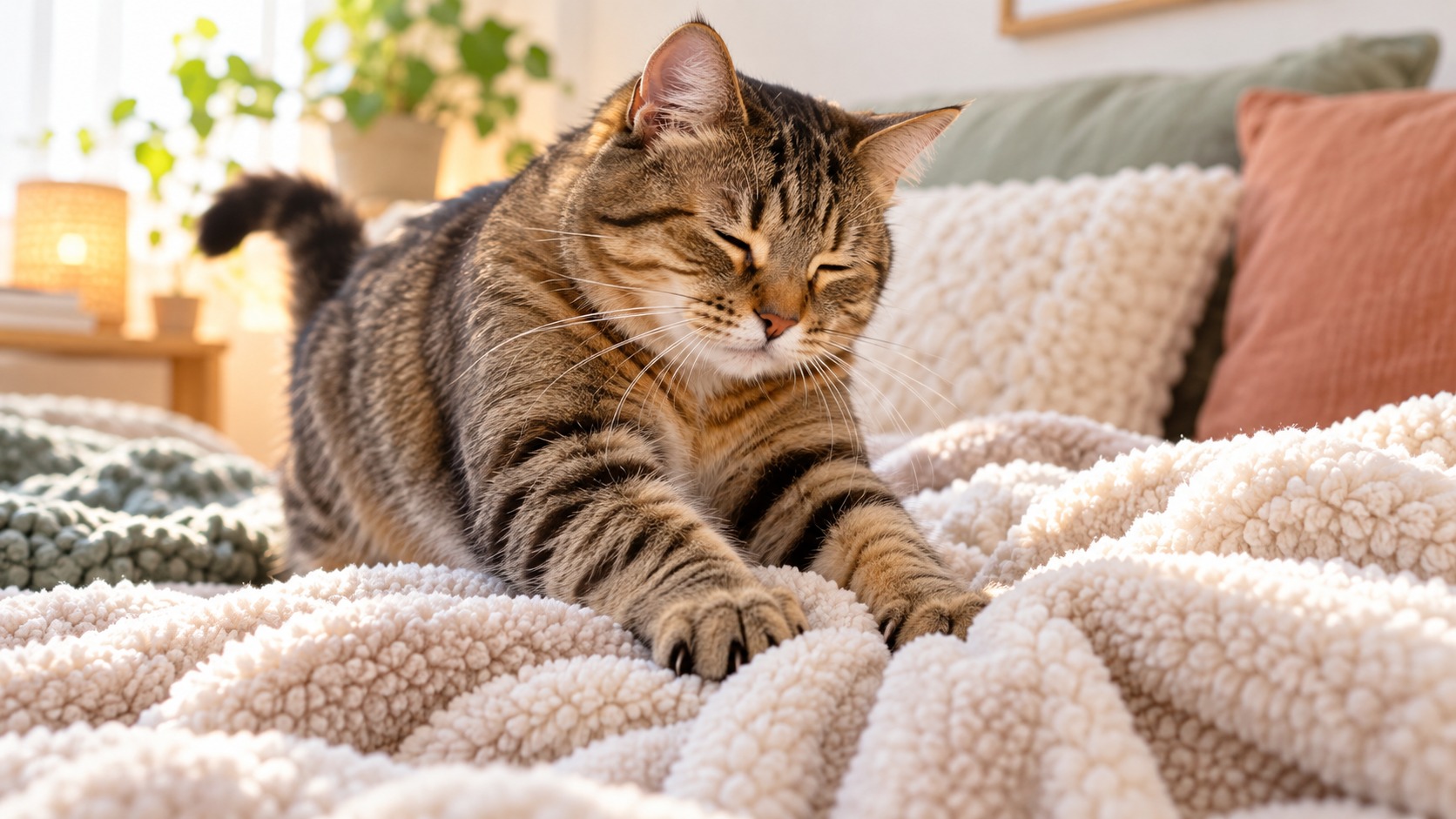
What is kneading?
Kneading is the rhythmic action in which a cat presses one front paw and then the other into a soft surface. Blankets, cushions and a person's lap are common targets. Owners often call it 'making biscuits' because it resembles kneading bread dough. Some cats also purr or settle down afterwards.
Fact: it begins in kittenhood
Kittens knead around their mother's teats during nursing; the movement helps stimulate milk flow. Cats Protection explains that the behaviour can continue after kittenhood, although not every adult cat kneads. It is normal for individual cats to show different preferences.
Theory: familiar feelings and relaxation
One theory is that the motion remains associated with the comfortable experience of nursing. An adult cat may knead a favourite blanket when getting ready to rest. It is tempting to interpret every kneading session as proof that a cat is happy, but behaviour should be read alongside the cat's posture and other signals.
Theory: leaving scent and preparing a resting spot
Another proposed explanation involves scent glands in cats' paws. Kneading may leave familiar scent on soft objects. Some experts also suggest it may be related to making a sleeping area comfortable. The exact reasons adult cats knead are not completely understood, so these explanations should be treated as theories rather than proven motives.
What if the claws hurt?
A thick blanket between your cat and your lap may make kneading comfortable for both of you. Avoid punishing the cat for a normal behaviour. Provide a cosy alternative resting spot if you would rather not be kneaded directly.
When to ask for advice
An abrupt behaviour change alongside pain, hiding, appetite changes or unusual agitation deserves attention. A vet can help assess medical concerns. Otherwise, kneading is commonly part of an individual cat's routine.
Further reading and sources
Explore more: Pet Care guides · Interactive quizzes · Niko’s fictional video.
Article compiled from the linked organisations' publicly available guidance. Fact-check and review before public promotion.