Puppy Socialisation: A Calm, Positive Start
How to introduce puppies to new sounds, people and places without rushing them.
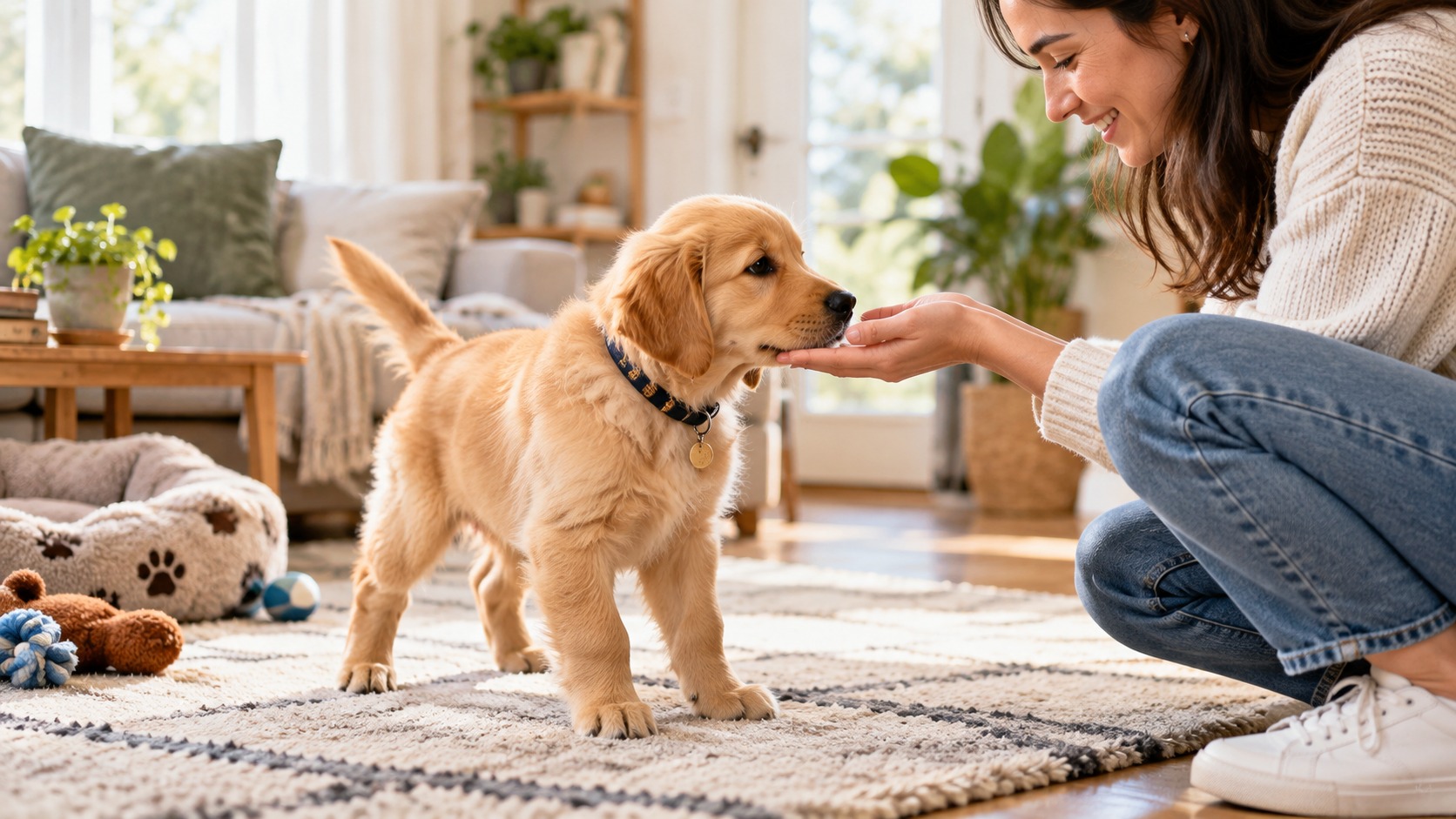
Socialisation is more than meeting dogs
A puppy is learning about the entire world: people, traffic sounds, household appliances, car journeys, handling, and different surfaces. The goal is not to collect as many greetings as possible. It is to help the puppy experience ordinary life in ways that feel safe and manageable. The RSPCA explains that early, positive experiences play an important role in later behaviour.
Let the puppy set the pace
Start with a short, low-pressure experience, such as watching people pass at a comfortable distance. Reward calm observation and allow the puppy to retreat. If your puppy freezes, hides, struggles to move away or becomes overwhelmed, increase distance or finish the session. Do not force contact with strangers or unfamiliar dogs.
What can you introduce at home?
Practise gentle paw handling, short grooming sessions and the sounds of everyday life at a comfortable volume. Use a safe mat or blanket as a place to settle. A trip in a parked car can be a first step before a short, comfortable car journey. Pair each experience with something the puppy likes, such as a favourite toy or appropriate treat.
Plan outings around vaccination advice
Your puppy may not yet have completed its vaccinations. Speak with your vet about safe exposure to the outside world and local disease risks. The RSPCA suggests that carrying a puppy outside can offer positive sights-and-sounds experiences before it is safe for them to explore public spaces on the ground.
Choose suitable company
Meetings with known, calm, healthy animals are preferable to chaotic greetings. Ask your vet about suitable classes and vaccinations. A good puppy class uses reward-based methods, gives puppies space and avoids overwhelming them. Brief, enjoyable sessions usually teach more than long, exhausting ones.
Keep going after puppyhood
Confidence develops with repeated, good experiences, not a one-week checklist. Continue reward-based training and revisit experiences gradually as your dog grows. If your puppy is persistently fearful or reacts aggressively, ask your veterinarian to recommend a qualified behaviour professional.
Further reading and sources
Explore more: Pet Care guides · Interactive quizzes · Niko’s fictional video.
Article compiled from the linked organisations' publicly available guidance. Fact-check and review before public promotion.