9 Indoor Enrichment Ideas for Dogs on Rainy Days
Practical indoor enrichment ideas including sniff games, toy rotation and short training sessions, plus tips for choosing safe toys.
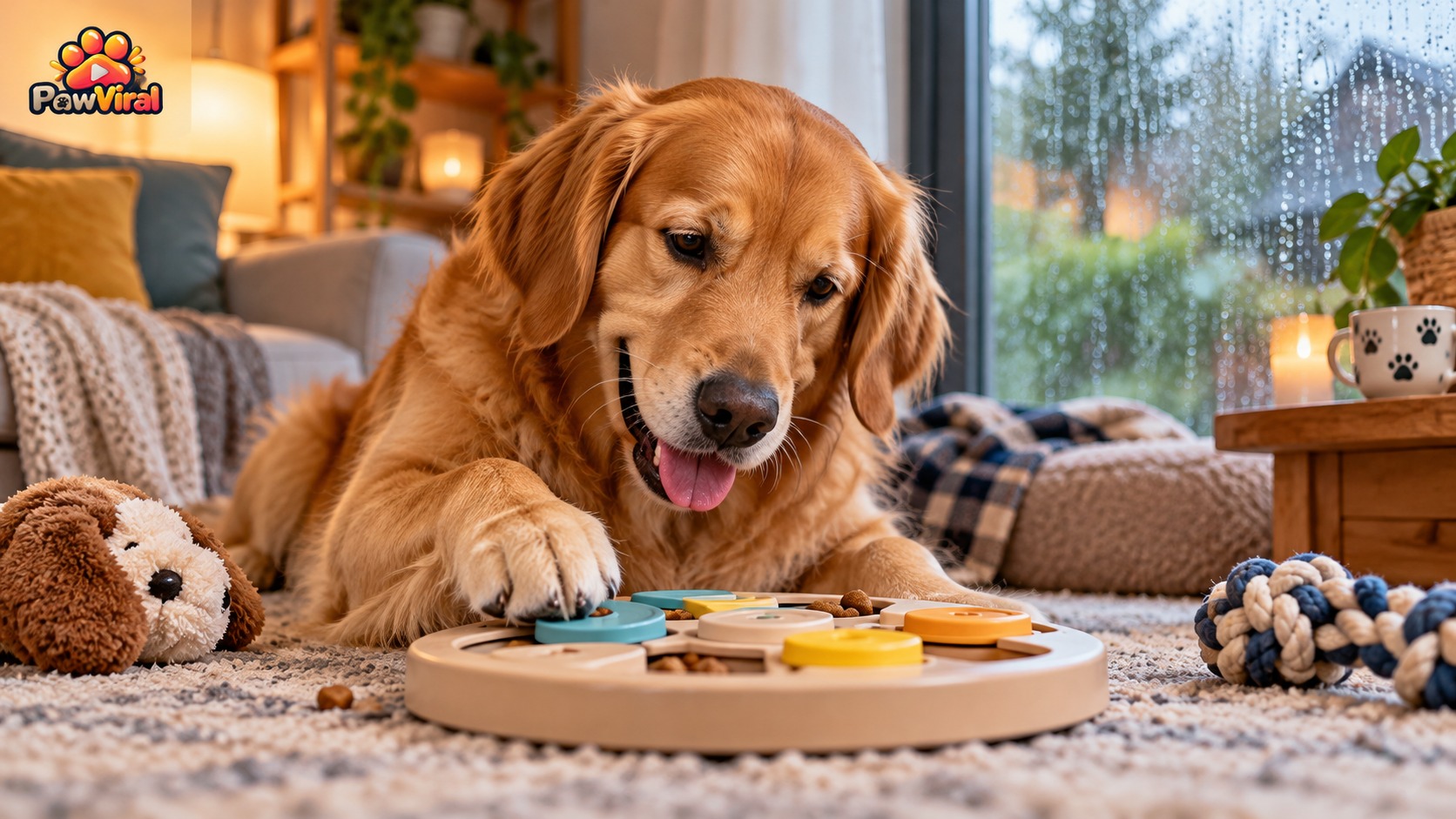
What counts as enrichment?
Enrichment is about giving your dog opportunities to explore, make choices, solve manageable problems and enjoy suitable play. Indoor activities can complement regular exercise; they do not automatically replace outdoor walks or other physical activity. Choose options that suit your dog’s age, mobility, preferences and any advice from your vet.
1. Scatter a little of their usual food
For dogs that enjoy sniffing, scatter part of an ordinary meal across a clean, safe area and invite them to find it. Avoid hiding food near chemicals, stairs or places where another pet might guard it. Count these portions as part of their daily food rather than adding endless treats.
2. Try a supervised search game
Ask your dog to wait in another room with a family member, then hide one of their favourite toys in an easy location. Release them to find it and celebrate gently when they succeed. Start simple; increase difficulty only if they remain relaxed and engaged.
3. Rotate a small collection of safe toys
Not every toy needs to be accessible all the time. Rotating a few favourites may help keep play interesting. Examine toys regularly: discard anything with loose parts or damage, and choose sizes and materials appropriate for your individual dog.
4. Teach a five-minute trick
Use kind, reward-based training to practise cues such as touch, spin or going to a mat. Brief, successful sessions often work better than pushing through when your dog is tired. End on an easy task and allow your dog to rest.
5. Use a suitable puzzle feeder
Commercial puzzle feeders can turn part of a normal meal into an activity. Pick a design appropriate to your dog, introduce it gently and supervise use. If a dog becomes frustrated, simplify the puzzle or switch to something easier.
6–9. Four more simple options
Offer a supervised gentle tug game using a suitable toy; practise familiar recall across a safe room; create a small obstacle course using stable household objects without jumps; or offer a quiet chew appropriate to your dog. Not every dog enjoys every activity, so let them choose and stop if they show discomfort.
Signs the activity is too much
Stress may show as stiffness, turning away, lip-licking or trying to escape. Stop the activity and give your dog space. The point is enjoyable enrichment, not forcing an unwilling pet to complete a challenge.
Frequently asked questions
Do indoor games replace walks?
Usually not. Indoor activities offer mental stimulation, while most dogs still need suitable physical exercise and opportunities to explore outside, unless a vet advises otherwise.
Are homemade puzzle toys safe?
Only when materials and design are appropriate and you can supervise closely. Avoid small parts, sharp edges or materials your dog may swallow.
Further reading and fact-checking sources
These original summaries are informed by established animal-welfare guidance. Visit the primary sources for fuller context.
Editorial note: AI-assisted article, fact-checked against the linked sources, but not independently reviewed by a veterinarian.