Indoor Cat Enrichment: 8 Ways to Make Home More Interesting
Cat-friendly play, scratching, climbing, resting and feeding ideas to support your indoor cat’s natural behaviours.
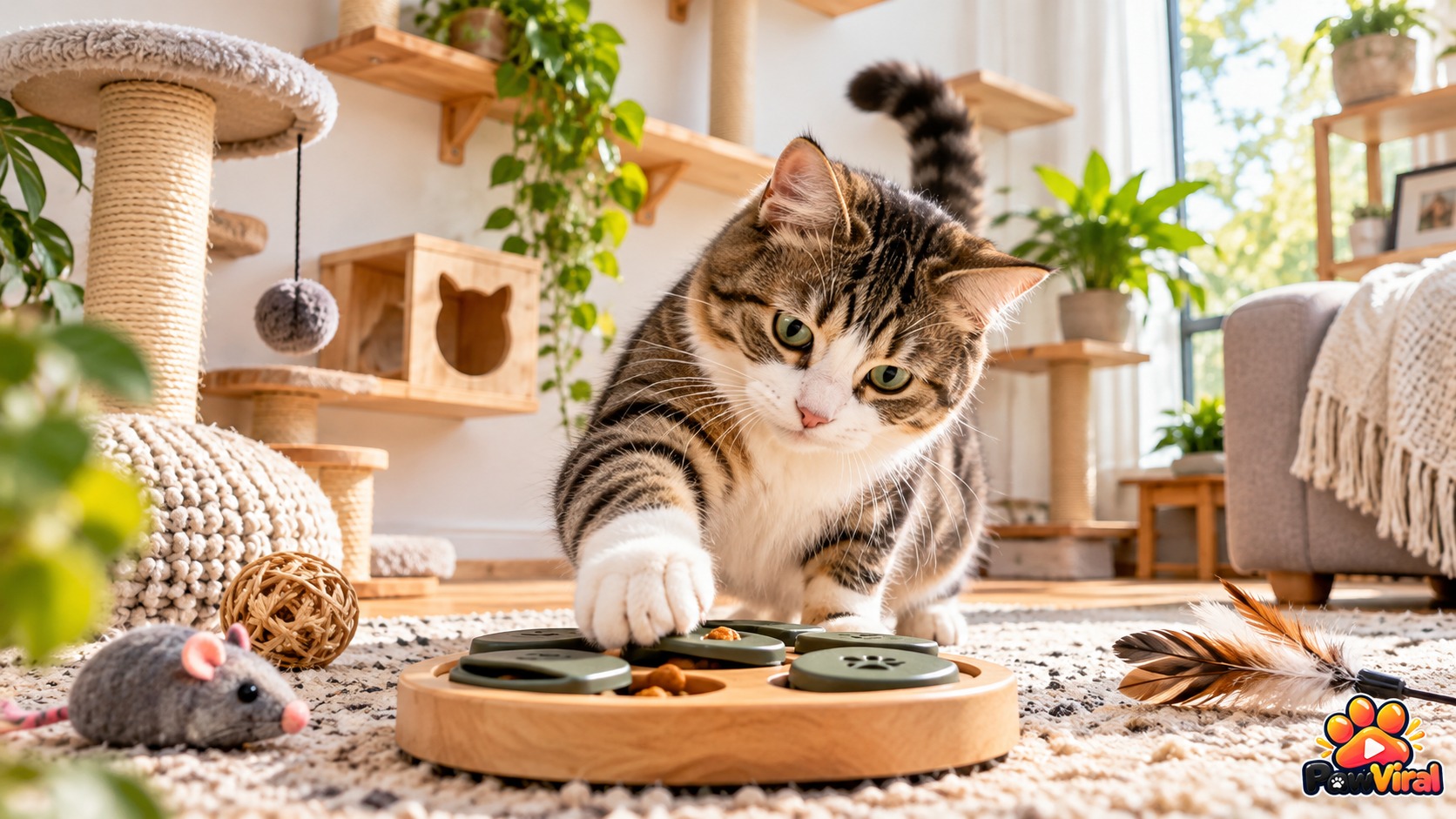
A cat-friendly home has more than toys
Cats benefit from places to climb, hide, scratch and rest, with access to separate resources. A calm home with predictable routines is often just as useful as an expensive toy. Cats differ: watch what yours chooses instead of assuming one activity fits every cat.
1. Add a comfortable elevated perch
A secure cat tree or a sturdy shelf designed for pets lets many cats observe from above. Keep it away from open windows and unstable furniture. Some cats prefer low hiding spaces, so offer a choice.
2. Try short interactive play sessions
Move an appropriate wand toy to imitate the irregular movement of prey. Let your cat stalk and catch it regularly so play is satisfying. Put away string and wand toys after the session: swallowed string can cause a serious obstruction.
3. Offer scratching choices
Provide stable scratching options near places your cat naturally spends time. Some cats prefer horizontal cardboard, others like tall vertical posts. Scratching is normal, so give appealing alternatives instead of punishing it.
4. Rotate toys, not your whole routine
A few safe rotating toys can feel fresher than a permanently overflowing toy basket. Watch for fraying, sharp pieces or detachable bits. Avoid assuming every toy sold online is suitable.
5. Feed through manageable puzzles
A puzzle feeder can help some cats work for part of their usual food. Begin with a very easy feeder and gradually adjust if your cat enjoys it. Do not withhold meals to force participation.
6. Make a cardboard-box retreat
A clean box with safe openings can be an inexpensive hiding place. Place it in a quiet area away from the litter tray, and allow your cat to leave at any time.
7. Give them room to opt out
Cats need peaceful rest and freedom from unwanted attention. If you have more than one cat, provide sufficient separate beds, litter trays and feeding spaces to help reduce conflict.
8. Watch for behaviour changes
If your cat suddenly hides more than usual, stops eating or changes toileting habits, enrichment alone is not the answer. Contact your vet to discuss possible health or stress-related causes.
Frequently asked questions
How long should I play with an indoor cat?
There is no universal session length. Offer short, enjoyable sessions suited to your cat and stop if they lose interest or seem distressed.
Can I leave string toys out?
No. Put away loose string or wand toys when you are not actively supervising play.
Further reading and fact-checking sources
These original summaries are informed by established animal-welfare guidance. Visit the primary sources for fuller context.
Editorial note: AI-assisted article, fact-checked against the linked sources, but not independently reviewed by a veterinarian.